Underglaze Blue and Copper-Red Dragon Mei-Ping Vase, Xuande Period, Ming Dynasty, with Original Zitan Box and Court Painting
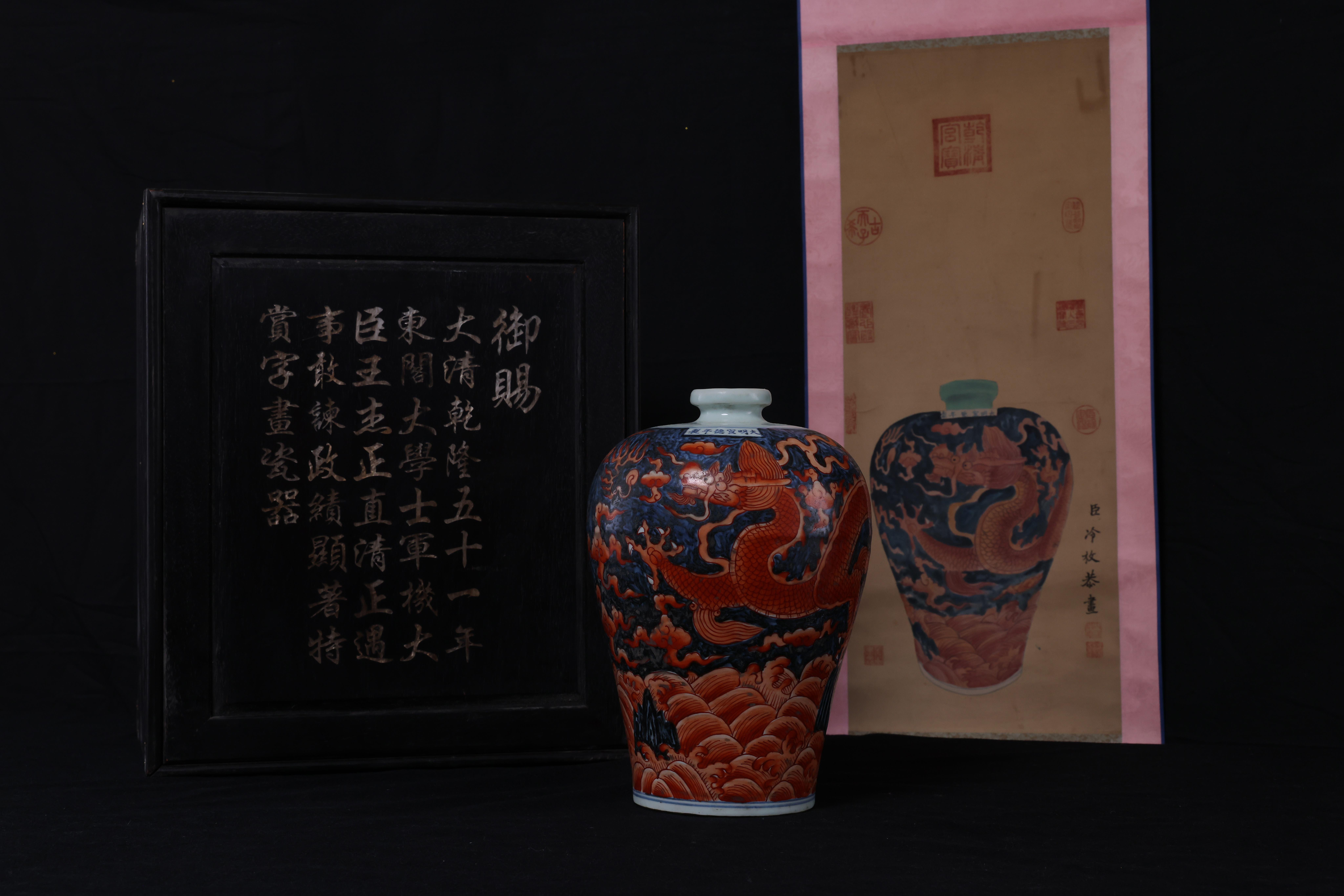
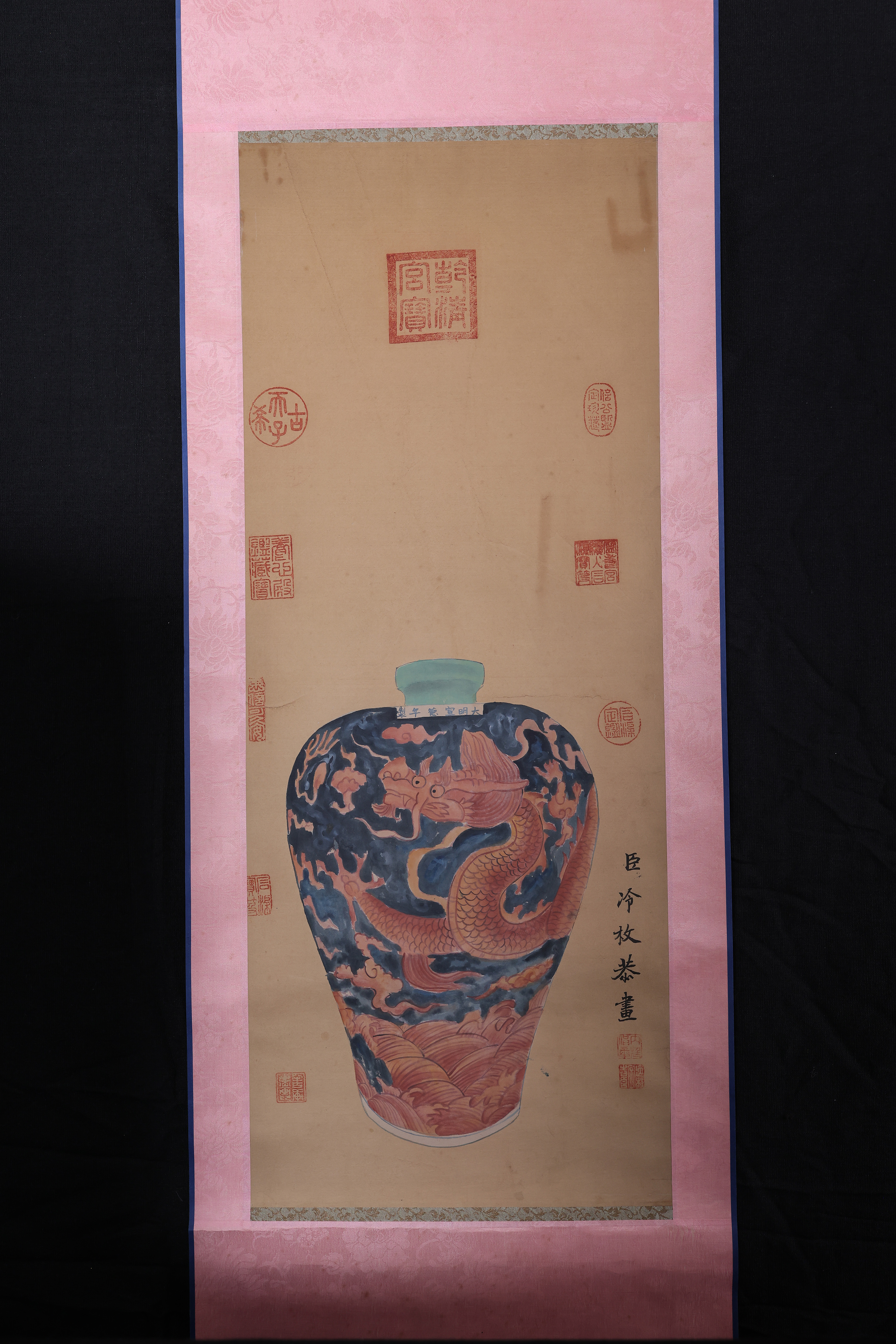
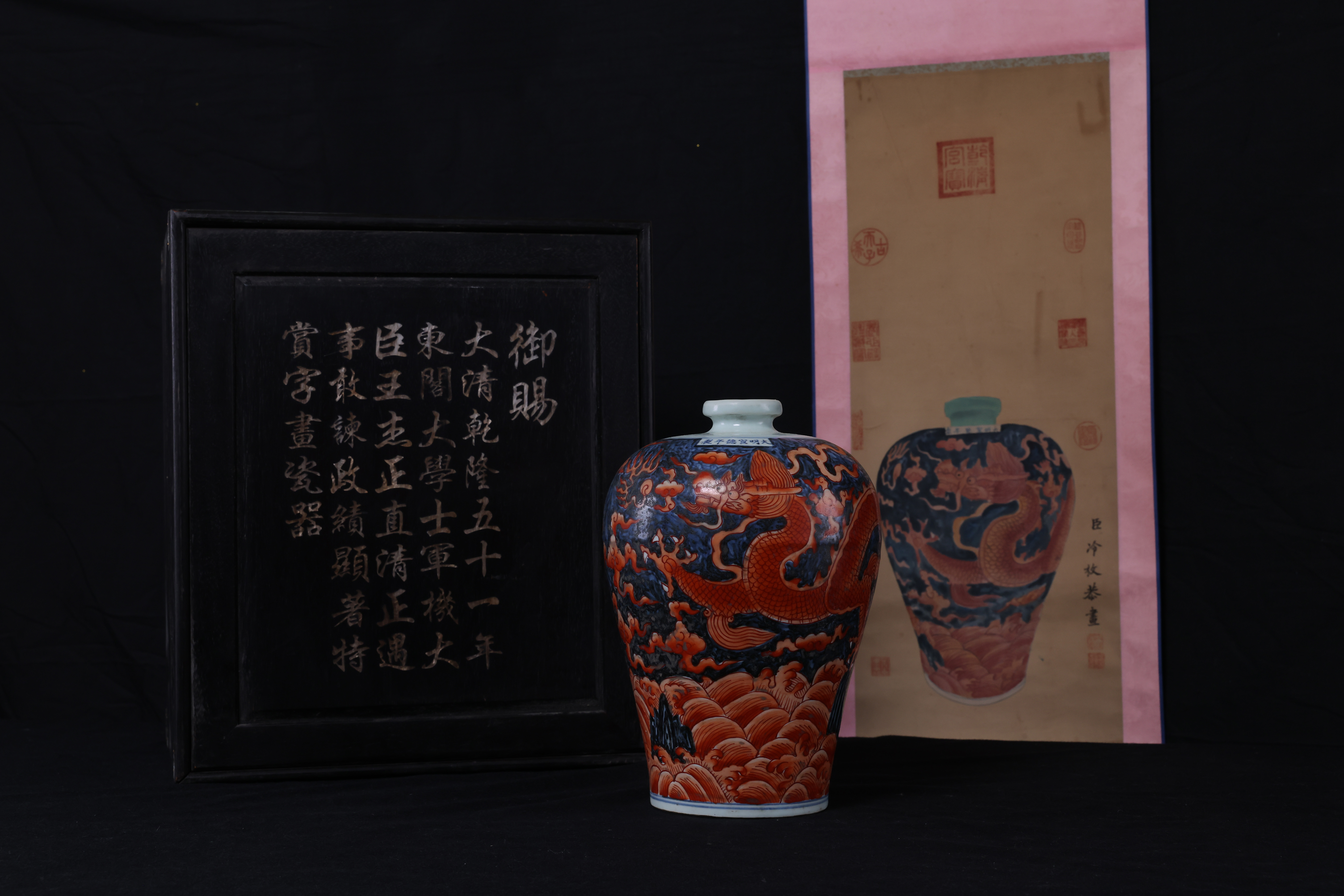
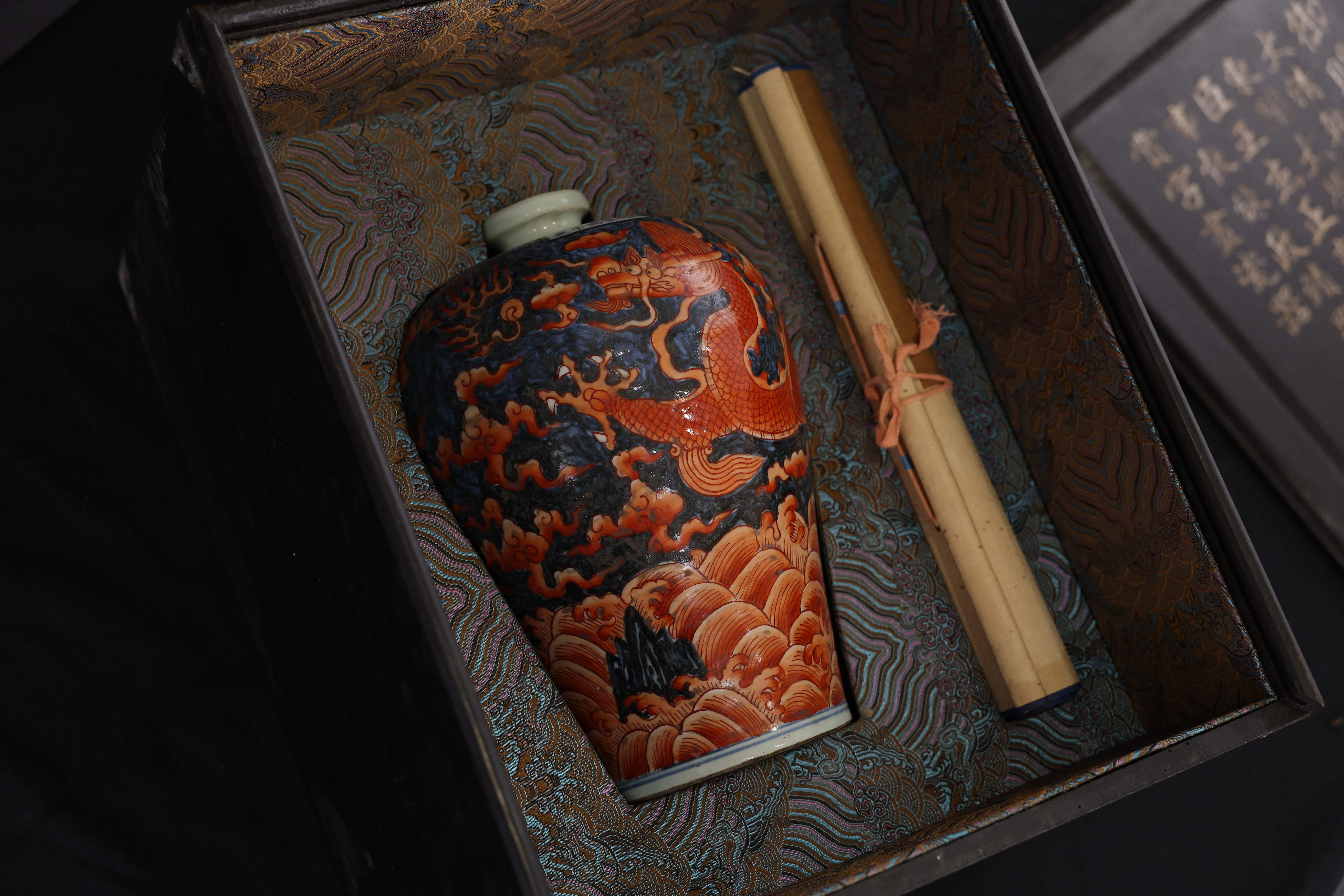
This is a Xuande-period (1426–1435) underglaze blue and copper-red dragon mei-ping vase, accompanied by its original zitan (rosewood) box and a court painting by Giuseppe Castiglione (Lang Shining) documenting the vessel, exceptionally rare and historically significant.
The vase has a graceful, upright form, with a rounded shoulder, full belly tapering slightly toward the base, and precisely balanced proportions. The lines are soft yet fluid, exemplifying the refined elegance of early Ming imperial porcelain.
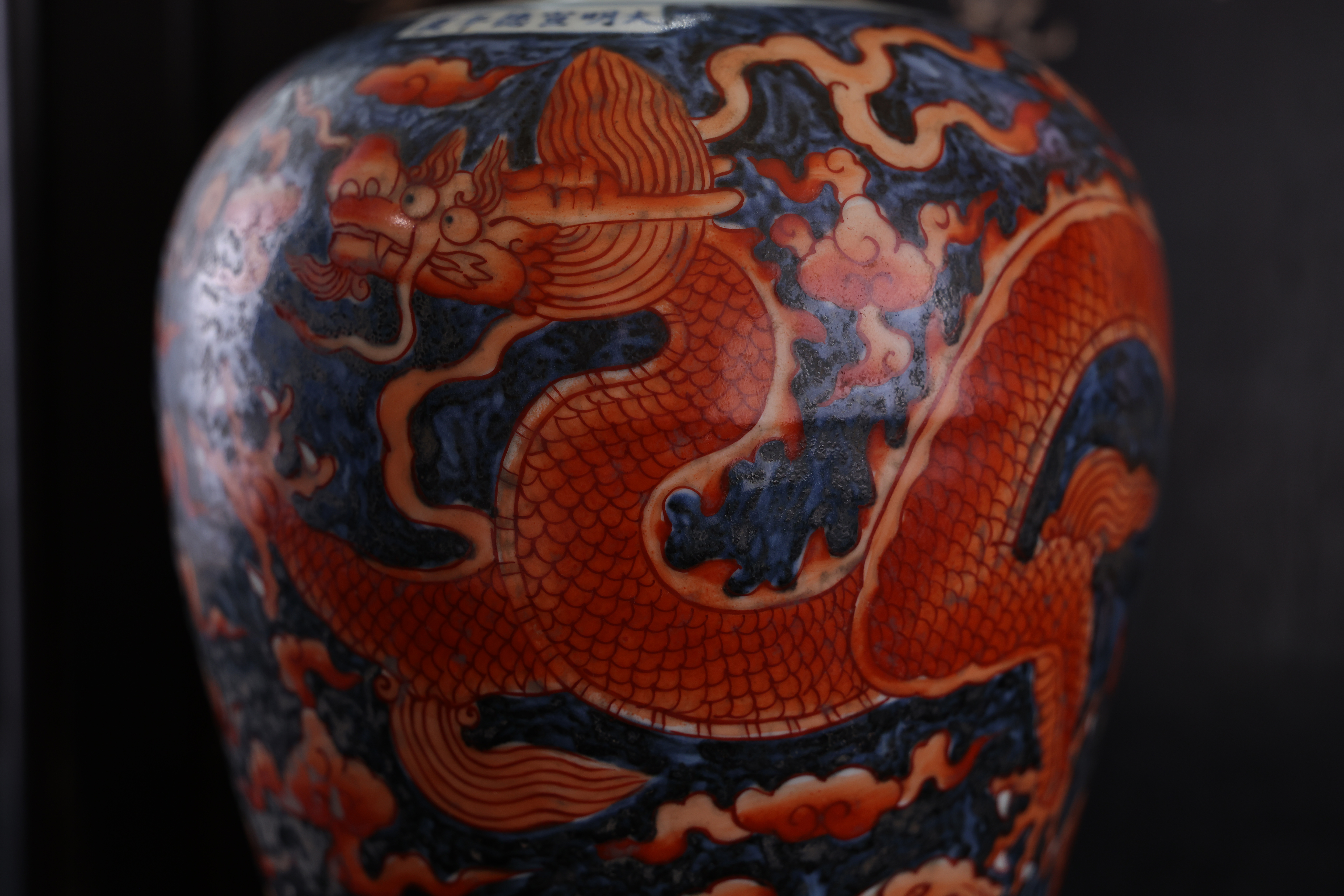
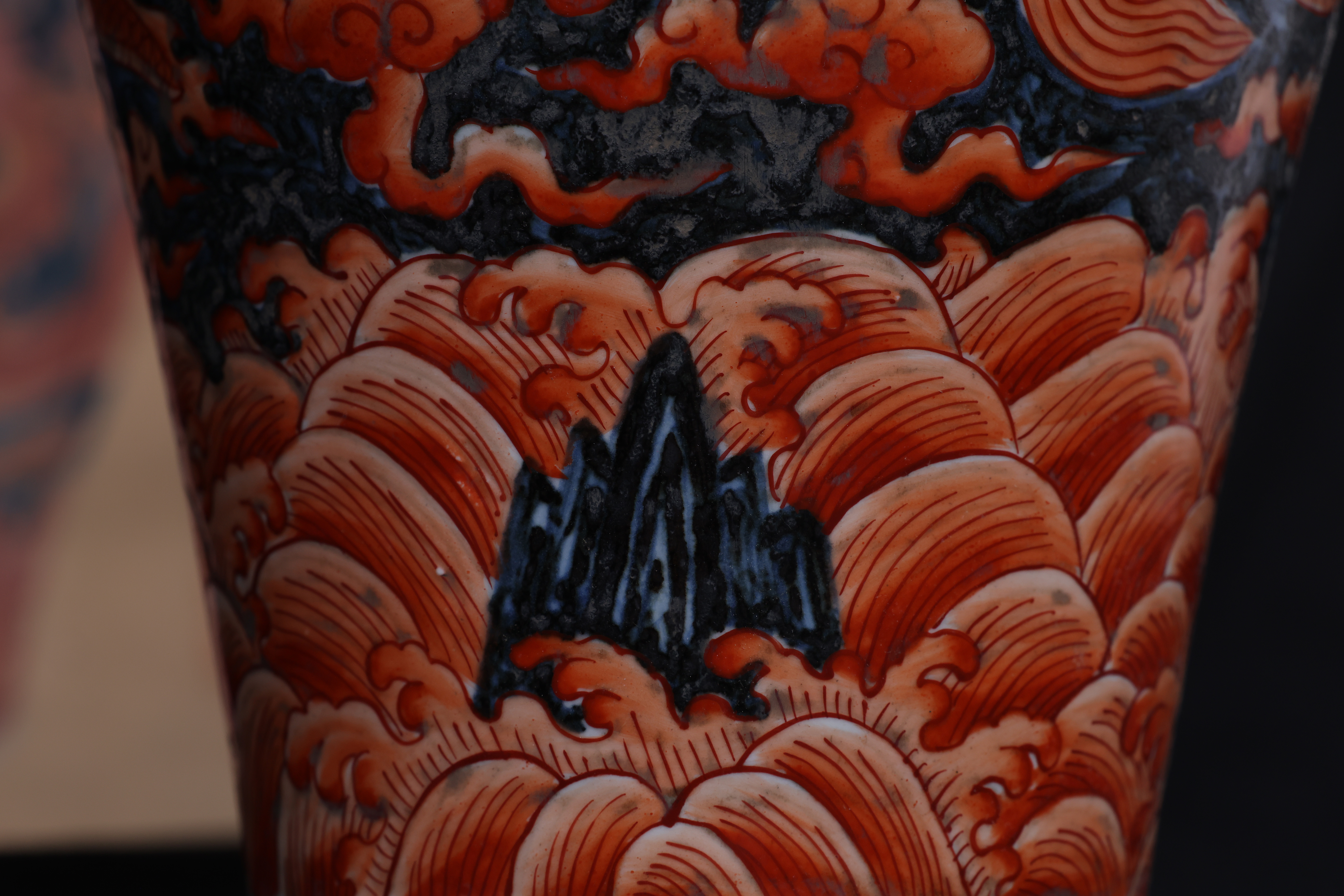
The decoration combines underglaze blue with copper-red (ferruginous red) dragons. The glaze is lustrous and smooth, the blue steady and deep, exhibiting the violet-tinged hue characteristic of imported Sumali cobalt. The dragons soar amid clouds and mist, with meticulously delineated scales, layered composition, and dynamic, vigorous forms, symbolizing imperial authority and celestial mandate. The base is encircled with sea-wave and riverbank motifs, with flowing undulating lines that create movement and visual depth. The overall blue-and-red contrast is striking yet harmonious, conveying a sense of “stillness within motion, intensity without disorder.”
Porcelain from the Xuande imperial kilns is renowned for its technical precision, refined body and glaze, and elegant coloration, with blue-and-copper-red wares being especially rare, often used for palace display, imperial gifts, and ritual purposes. This vase is accompanied by its original zitan box and archival court painting, which accurately records the vessel’s form, motifs, and dragon composition, signed and sealed by Lang Shining, providing direct documentation of Qing imperial collection and appreciation, and thus of extraordinary historical and royal provenance value.


